Agent Foundry — tool-using AI in 14 days
A production AI agent integrated into your stack — with evals, observability, and guardrails.
Get a scoping call
Building an AI agent is easy. Building one that works reliably in production, recovers from failures, stays within cost budgets, and improves over time is a different problem entirely. Agent Foundry is our 14-day accelerator that delivers a scoped, instrumented, production-ready agent — not a demo notebook.

Measured across similar accelerator engagements we've shipped.
Get a proposalWhat we build
We scope the agent's objective, define the tool surface, and design the decision loop with failure modes mapped before a line is written.
Web search, database queries, API calls, code execution — every tool is typed, tested, and sandboxed with retry and fallback logic.
A test suite that scores agent outputs against ground-truth examples. You own the evals — not just the model.
Every LLM call traced with OpenTelemetry: token counts, latencies, tool call chains, and cost per run — all queryable.
Approval gates, confidence thresholds, and Slack/email escalation paths for decisions that should stay with humans.

How we Deliver
Best practices for Agent Foundry
Define tool schemas before writing agent code
Ambiguous tool boundaries are the most common source of production failures. A clear schema surfaces edge cases before any code is written.
Build your eval set before tuning prompts
Without a baseline, you can't tell if a prompt change improved anything. Evals first, optimization second.
Log every LLM call with full input and output from day one
Retroactively adding structured logging after a production incident is far more painful than building it in at the start.
Start with one tool, one task
A single-tool loop that reliably passes evals is a stronger foundation than a five-tool system that passes sometimes.
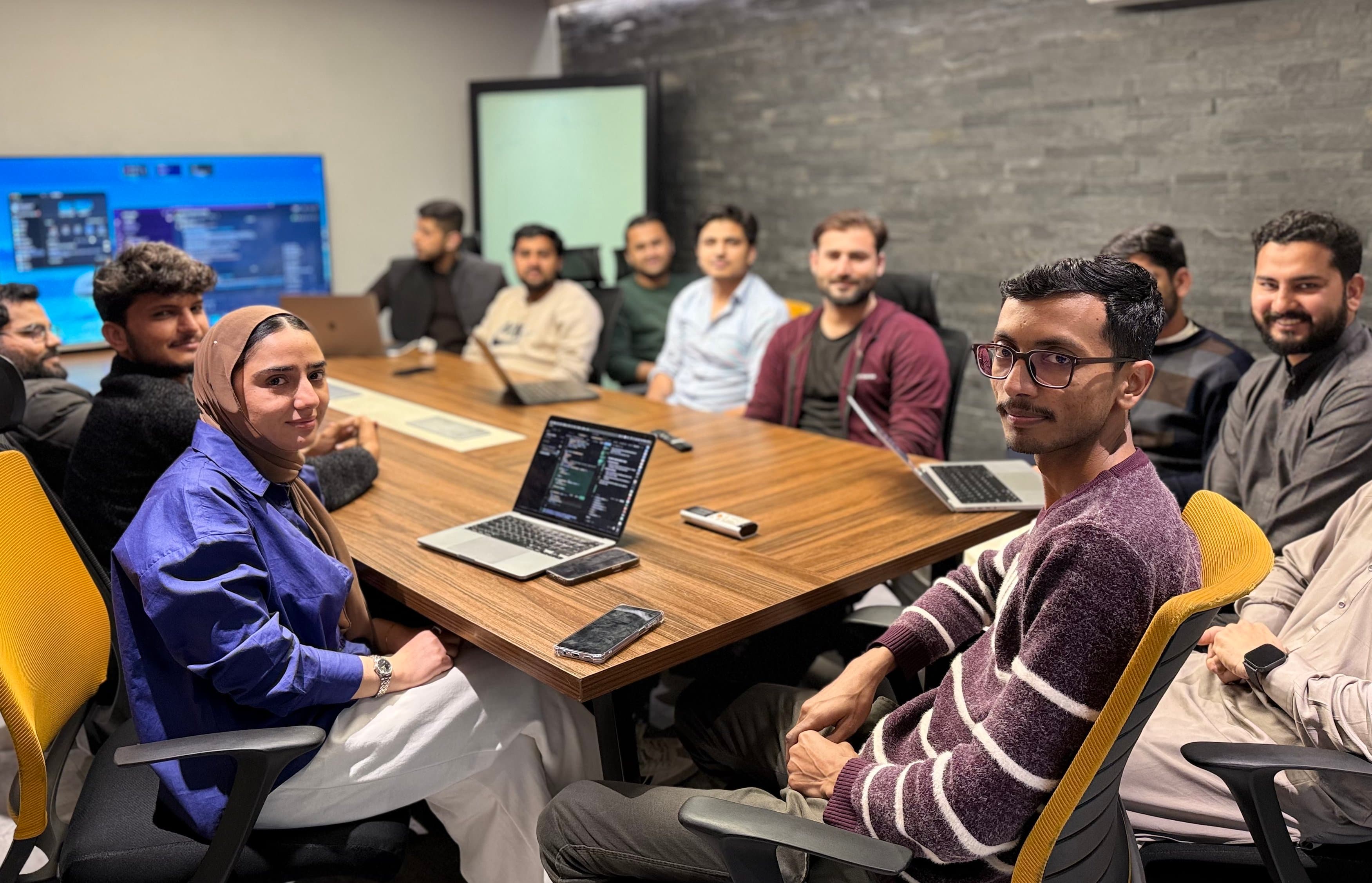
From Evolve Edge
“We don't ship AI without an eval harness. Not because clients ask — because it's the only way to know the system is actually working in production.”
FAQ
Have Questions? Let's Talk.
Free 30 minute call with a senior engineer, not a salesperson. We have got the answers to your questions.