Voice Pilot — live voice agent in 21 days
Sub-second voice agent deployed on real telephony infrastructure in three weeks.
Get a scoping call
Voice AI in a demo is straightforward. Voice AI that handles real calls — with interruptions, background noise, mid-sentence topic changes, and sub-second response times — takes production depth most demos never show. Voice Pilot delivers a battle-tested voice agent on Twilio, Vapi, or LiveKit in 21 days.
What we build
Deepgram for transcription, ElevenLabs or Play.ai for synthesis — tuned for the lowest perceptible latency on your hardware.
Twilio Programmable Voice with PSTN, SIP, WebRTC, and toll-free number provisioning. Inbound and outbound call flows.
Turn-taking logic, barge-in detection, silence handling, and a natural conversation flow designed for your use case.
The agent can query your CRM, schedule appointments, look up orders, and write back outcomes in real time.
Real-time PII masking, call recording with consent flows, and compliant storage — ready for healthcare and finance.
How we deliver
Best practices for Voice Pilot
Optimize for turn latency before everything else
Users tolerate transcript errors and imperfect answers far more readily than silence. Latency is the primary trust signal in voice.
Design the fallback path before the happy path
An agent that can't gracefully hand off to a human will destroy trust faster than a slow one. Build escalation first.
Test on real phone hardware, not browser audio
PSTN codec compression and network jitter change latency profiles significantly. Browser testing gives a false sense of readiness.
Handle barge-in from the start
Bolting interrupt detection on after the fact requires rearchitecting the response pipeline. It's far cheaper to design for it from day one.
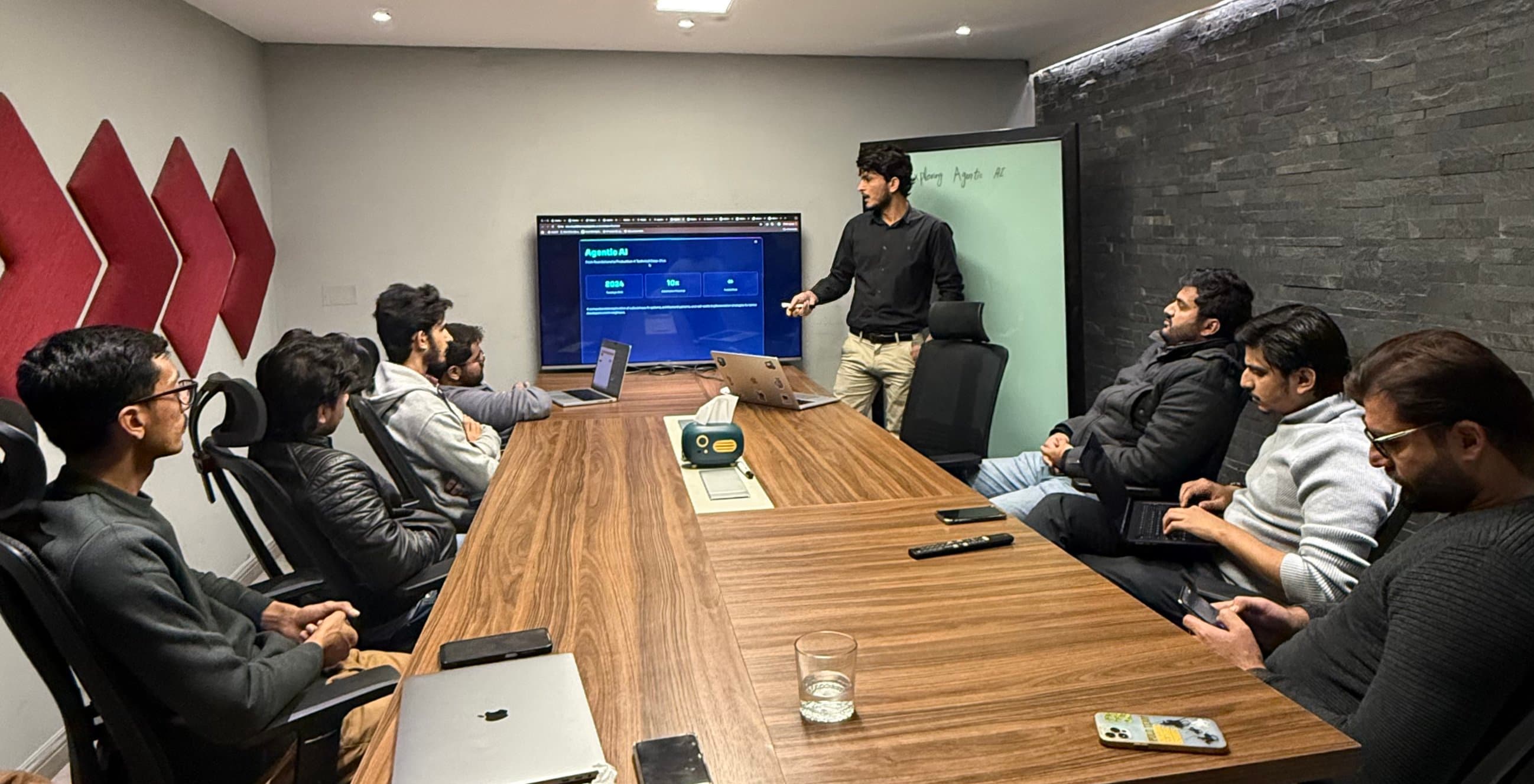
From Evolve Edge
“Voice AI is deceptively easy to demo and brutally hard to ship reliably. We focus on production fidelity — latency, error handling, compliance — not demo polish.”
FAQ
Have Questions? Let's Talk.
Free 30 minute call with a senior engineer, not a salesperson. We have got the answers to your questions.